






At 10 o’clock in the morning on the first Saturday in May, nearly 80 folks converged upon the University Congregational United Church of Christ, located just across the street from the University of Washington’s Seattle campus of tall trees and stately halls.
Arriving singly or in groups, these people bypassed the main entrance of the church, heading instead to a set of stairs that led down to a double set of cherry-red doors at the church’s basement-level entrance.
The moment the visitors stepped through those doors, they were greeted by tantalizing aromas wafting out from the basement kitchen – of roasted potatoes, sausage and coffee. And just a few steps further in, they received a warm welcome from Kristina Olave, JD, the top-knotted, high-energy Executive Director of Teen Feed.
Hovering nearby, Daniel A. Blue, Sr., Treasurer of Teen Feed’s Executive Committee, encouraged guests to grab a plate and make their way down a long buffet that offered a generous variety of breakfast entrees, along with platters of pastries and fruit.
Once guests had loaded up their plates, they moved next door into a large meeting room that had been set up with bistro lights and cloth-covered tables with living-plant centerpieces and original art.
The occasion was a celebration of Teen Feed’s forty years of service to at-risk youth in Seattle’s University District.
But this happens every single night in that church basement: the delicious smells from the kitchen, the nutritious meals put out on that very same buffet table, those same china plates and those reliably warm welcomes from the Teen Feed staff and volunteers – that’s what scores of young people, ranging in age from 13 to 25, can count on finding.
Teen Feed’s meal program began in the midst of the Reaganomics era. Even Seattle, which had a popular progressive mayor in the 1980s and liked to bill itself as America’s most livable city, was not without its downtrodden. Youth alienation and homelessness were on the rise. In 1983, LIFE Magazine ran a devastating “Streets of the Lost” photo essay that focused on the street kids of Seattle. A year later, a documentary called “Streetwise” followed up with some of those adolescents, and earned an Oscar nomination for its gritty capture of tough lives and bleak prospects.
The problem of youth homelessness seemed to be intractable.
But in 1987, nurses over at the University of Washington Medical Center discovered that the street kids in the U District were not just without roofs over their heads – they also were severely malnourished. The practice of dumpster diving for dinner, it seemed, did not yield optimal food pyramid results. Now this was a situation that the nurses could do something about. They organized a response, collaborating with faith and community groups in the U District to set up local meal sites and provide regular warm meals.
And to be clear, the young people that Teen Feed has served ever since are treated as guests, not as problems.
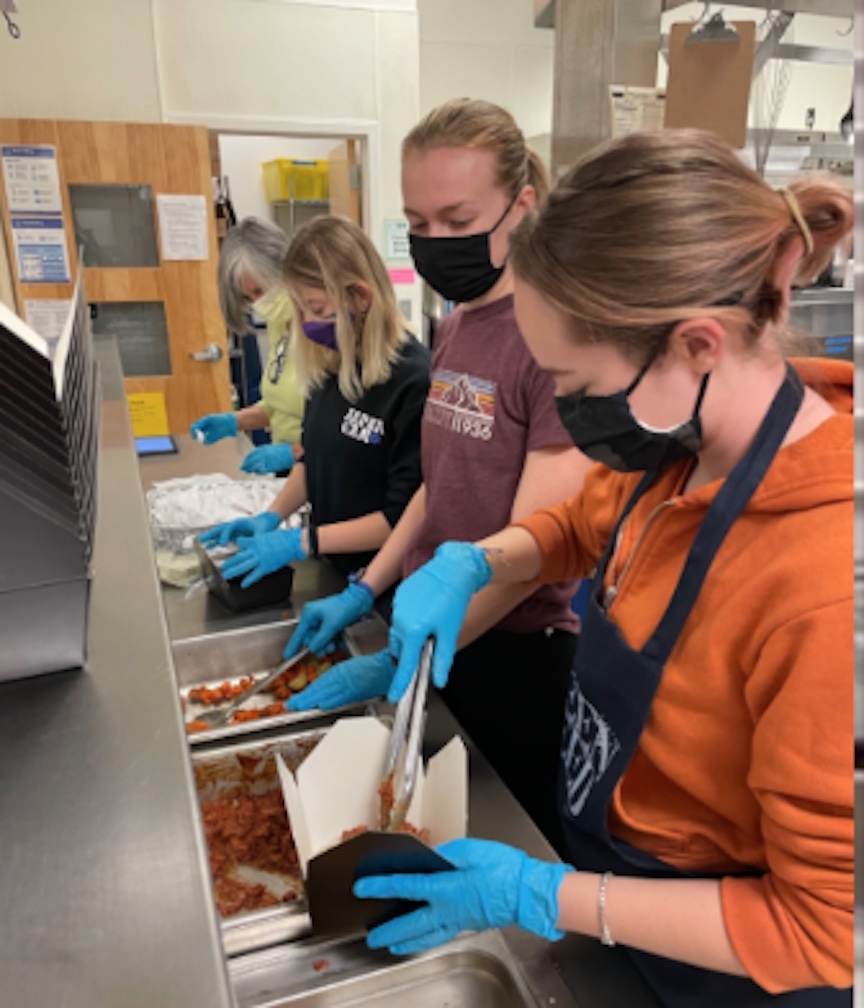 Ever since its founding, Teen Feed’s Meal Program has continued to fill empty bellies every night. This year, the program typically finds itself hosting more than 50 young guests at each meal. And staff or volunteers are always on hand to provide other items their guests might need to help get through another day: bus tickets, warm clothing, referrals to shelters, or simply a chance to talk. Advocates are trained in trauma-informed conversation and de-escalation techniques.
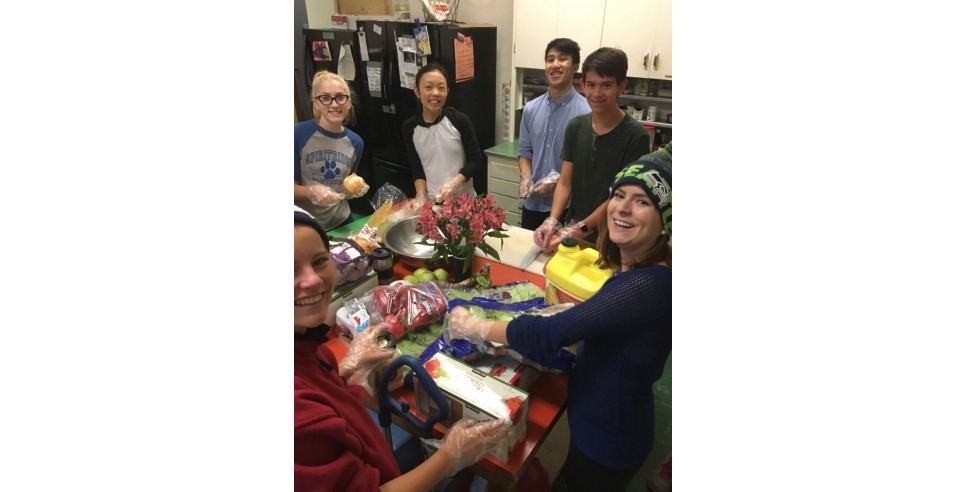
But some in-crisis youths are leery of “coming in from the cold.” They don’t trust any adults, nor avail themselves of any of the conventional social service safety nets. That’s why Teen Feed formulated an additional outreach program that actively seeks out those alienated young people who stick to the streets. Teen Feed’s specially trained staff members and peer volunteers go out with backpacks stocked with first aid supplies, new socks, sack lunches, and hot beverages to establish initial contact and build a baseline of trust that they hope will lead these youths to seek out more consequential support down the line.
The third leg of the Teen Feed stool is more like “in-reach.” Service Links for Youth (SLY) provides personalized case management to help young adults figure out what concrete steps they can take to transition to a life of greater stability. This might involve accessing health care, getting job training, securing housing, or figuring out ways to tackle other barriers that are preventing the individual from pursuing a desired goal.
Speaking at the brunch celebration earlier this month, 22-year-old program participant Helen told the gathered crowd that Teen Feed was the lifeline she needed after she ran away from a domestic violence situation and suddenly found herself without a phone, without money, without identification, and without a home.
“Thanks to Teen Feed, I could rest, eat, breathe, and feel safe and warm again,” Helen said.
Just a few quarters shy of earning her college degree, Helen was helped by Teen Feed to create a plan that enabled her to finish her coursework and earn her degree.
“The people at Teen Feed leaned in, instead of looking away,” Helen said. “They helped me move from just surviving to thriving. And, something I didn’t expect: they introduced me to community.”
Indeed, Teen Feed helps to build community among the young people the organization serves. A couple of different book clubs are currently running. For some time, they’ve held art classes and cooking classes, and this summer they’ll be starting a garden club.
But it’s also true that the organization that originally was founded with community support continues to depend on community. Teen Feed’s most recent annual report indicates that 65% of its work is funded by labor and goods donated by churches, restaurants, caterers, and cooking schools. Two thousand volunteers stepped forward to assist – many are former guests who were once served by the program.
“We are an example of grace and cooperation in a world of competition and violence,” Olave, the Executive Director, explains. “Teen Feed welcomes more volunteers and support as the world is [a] changing place, and it is time to lead with courage.”
To learn more about this organization’s ongoing work to locate, feed and care for young people who are trying to find their way off of the streets, visit https://teenfeed.org/
Barbara Lloyd McMichael is a freelance writer living in the Pacific Northwest. Check out her Pacific Rim Story Laboratory website

Barbara McMichael
Barbara Lloyd McMichael is based in the Pacific Northwest and writes about books and culture. She writes a syndicated weekly book review column called “The Bookmonger” that focuses on Northwest books and authors. Her PR for People® Book Review is written exclusively for The Connector.